Hot-Dip Galvanised & Powder-Coated Steel
Provides strong rigidity against prying. Ensure the base plate sits on nylon feet or washers so standing puddle water never wicks into raw bolt holes.
Many budget outdoor storage chests claim to be waterproof because their moulded plastic lid overlaps the side walls. In practice, rainwater pools in the recessed finger handle or runs down the rear hinge seam the moment a courier lifts the lid to deposit a second package. Even worse, when a wet parcel is dropped inside on an autumn afternoon and temperatures fall overnight, moisture condenses on the cold steel walls and collects on the floor.
Well-engineered parcel lockers borrow lip-gutter profiles from electrical enclosures and European postbox standard EN 13724. A folded steel channel around the throat diverts surface runoff sideways before it reaches the tubular EPDM rubber gasket, while a raised perforated tray in the base keeps cartons elevated above any wet drips carried in on the parcel itself.
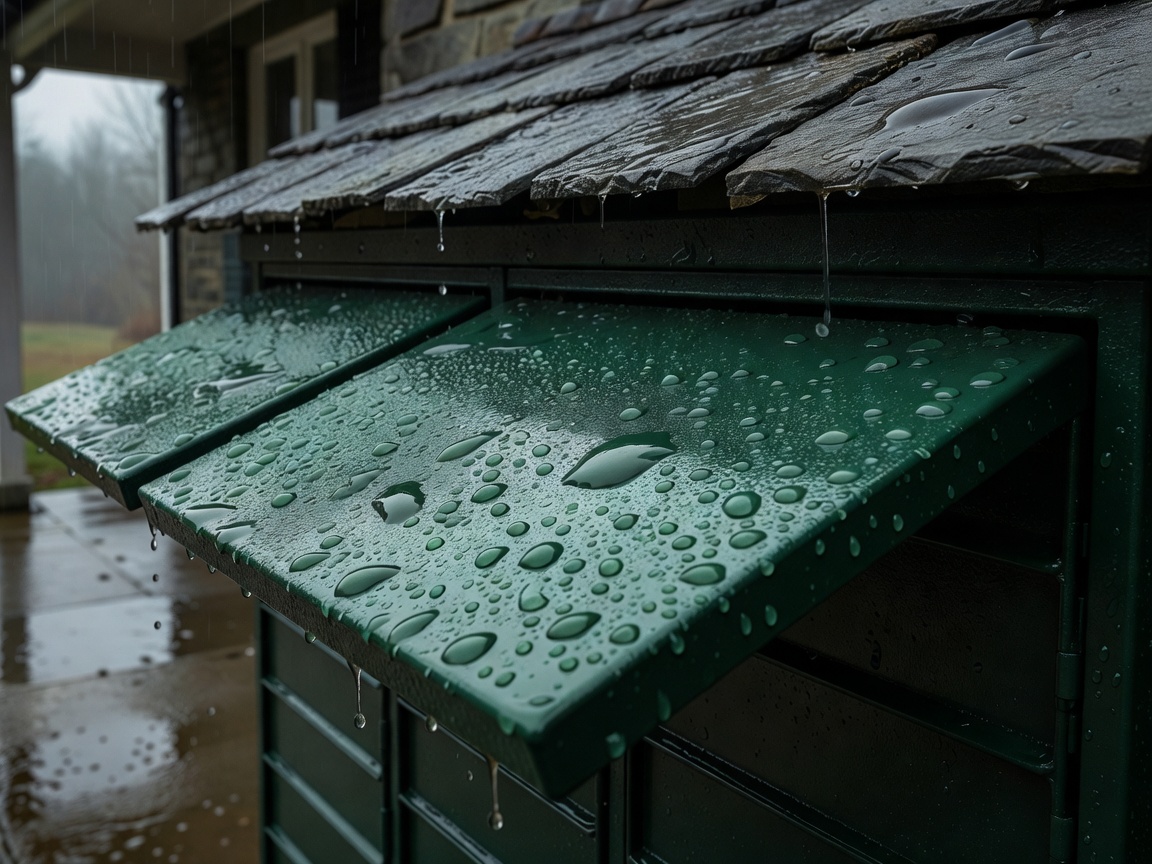
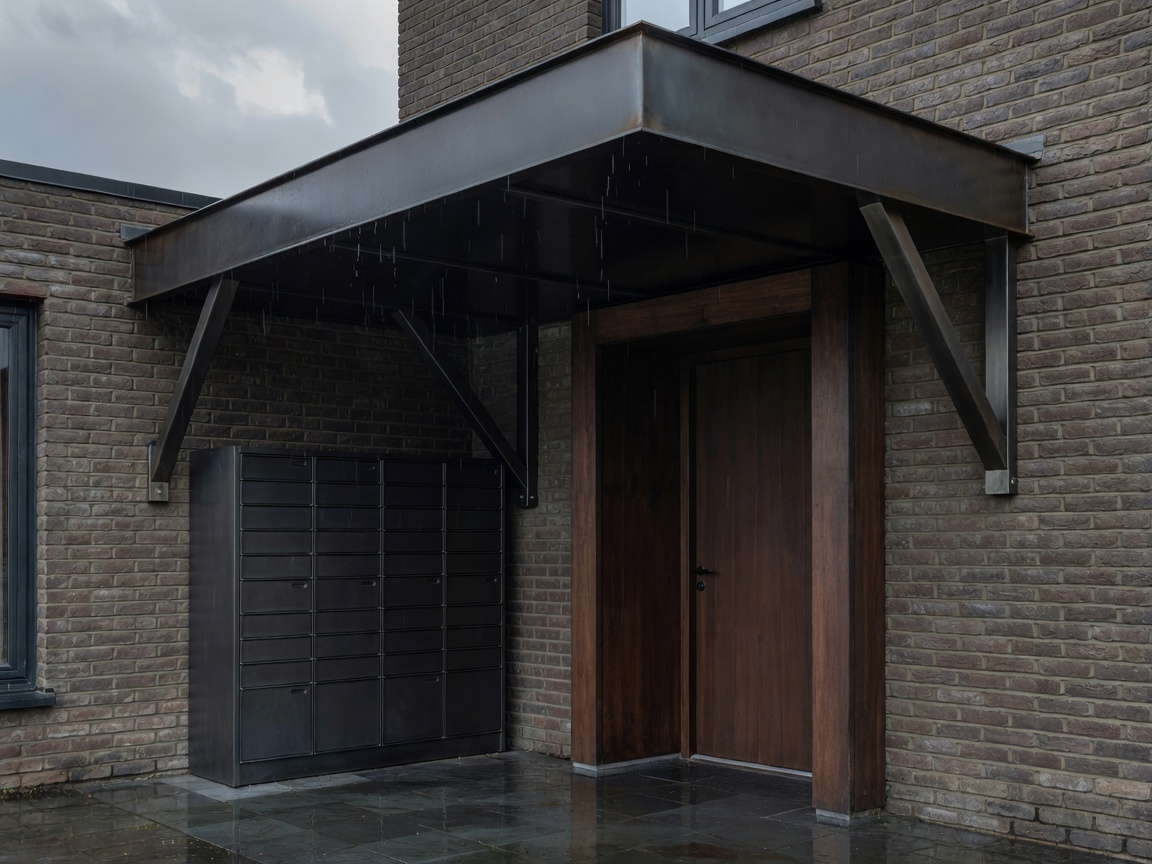
Before bolting a cabinet to your front wall, observe which brick face dries last after a storm. Facing a front-opening locker directly into the prevailing south-westerly wind forces horizontal rain against the key cylinder and door seals. Turning the cabinet 90 degrees so its door faces across the threshold—tucked against the porch return wall—reduces direct wind-driven water load by more than two-thirds.
If your entrance sits completely flush with an exposed pavement, adding a compact 350 mm polycarbonate or zinc door canopy above the locker shields both the box throat and the courier's hands while operating the latch.
Provides strong rigidity against prying. Ensure the base plate sits on nylon feet or washers so standing puddle water never wicks into raw bolt holes.
Essential within five miles of coastal salt spray where scratched paint on mild steel quickly blisters with surface rust around welds.
Thick double-wall polyethylene never rusts and deadens the clang of closing lids, though it requires internal ballast and stainless hasps for security.
Outdoor locks and seals endure UV radiation in summer and freezing moisture in winter. Two ten-minute checks each year prevent jammed doors and soggy parcels:
Wipe fallen leaf debris and grit out of the top throat channel. Apply a thin wipe of silicone rubber conditioner to the EPDM perimeter seal so it will not freeze shut against the painted lid during a January frost.
Never squirt heavy oil or grease into an outdoor wafer or pin-tumbler lock; oil traps road dust into a sticky paste. Use dry PTFE or graphite spray twice a year, and make sure the hinged weather shutter covers the keyhole.
Confirm the four 6 mm drainage weep holes in the floor corners remain clear of soil or spiders' webs after heavy downpours, and rinse the removable plastic floor grate.
Your privacy choices
We use necessary cookies to run the site and, with your consent, optional ones to measure visits. You can change this at any time. Read more